Category: Garage Door Spring

  • Garage Door Repair vs. Replacement: Which Is Right for Your Home?

    Garage Door Repair vs. Replacement: Which Is Right for Your Home?

    A garage door problem does not always mean it is time for a completely new door. A broken spring, worn roller, damaged cable, or isolated panel issue can often be handled with a targeted repair. However, an aging door with structural damage, repeated failures, or declining performance may make replacement the more practical investment.

    Understanding garage door repair vs. replacement means looking at the complete system instead of reacting to one broken component. Door age, repair history, safety, insulation, appearance, operating performance, and future maintenance costs all matter. The goal is to determine whether the existing door still has useful service life or whether a new system would provide better value.

    Garage Door Repair vs. Replacement: Where Should You Start?

    The best starting point is identifying the source and extent of the problem. Garage door repair focuses on correcting a specific issue while keeping the existing door and most of its components. This may involve replacing springs, cables, rollers, hinges, tracks, weather seals, or opener components.

    Replacement is a much broader process. The existing door is removed and replaced with a new system when continued repairs no longer make practical sense. Extensive deterioration, multiple damaged sections, outdated construction, poor insulation, or recurring mechanical failures can all influence that decision.

    A relatively newer door with one failed component may only need a straightforward repair. An older door that has required several repairs may deserve a closer replacement comparison. Looking at the entire system gives you a better basis for making the right choice.

    When Is A Garage Door Repair Enough?

    Many garage door problems are isolated and can be corrected without replacing the entire door. If the panels remain solid and the frame, tracks, hardware, and other major components are in reasonable condition, repair may be the most sensible option.

    Common repair situations include:

    • Broken garage door springs
    • Damaged garage door cables
    • Worn rollers
    • Bent or misaligned tracks
    • Faulty hinges
    • Loose hardware
    • Minor panel damage
    • Garage door opener problems
    • Normal mechanical wear

    For example, a torsion spring can snap suddenly and leave the door stuck. That does not automatically mean the entire garage door has reached the end of its service life. If the panels and supporting hardware remain strong, replacing the spring may restore normal operation.

    The same applies to worn rollers and cables. These parts experience regular movement and are expected to wear over time. Replacing a failed component can extend the useful life of an otherwise dependable residential garage door.

    Understanding garage door repair vs. replacement becomes easier when the existing door is still structurally sound, and the problem is limited to a serviceable component.

    Is Your Garage Door Starting To Cost More Than It Should?

    One repair is very different from a pattern of repeated repairs. A single broken spring may be an ordinary maintenance issue, while a door that repeatedly needs springs, rollers, cables, tracks, and other components may be showing broader signs of wear.

    Replacement deserves consideration when you are dealing with:

    • Multiple damaged panels
    • Extensive structural deterioration
    • Significant rust or corrosion
    • Frequent spring or cable failures
    • Repeated track or roller problems
    • Ongoing opener issues
    • Increasing repair expenses
    • Poor insulation
    • Recurring safety concerns
    • Unreliable daily operation

    Imagine repairing one worn roller today and dealing with another major component several months later. Each repair may solve an immediate problem, but the accumulated garage door repair cost can eventually become difficult to justify.

    That is when looking at the door as a complete system becomes important. If several components are approaching the end of their service life, putting more money into individual repairs may not offer the same value as replacing the door.

    Warning Signs That Point Toward Replacement
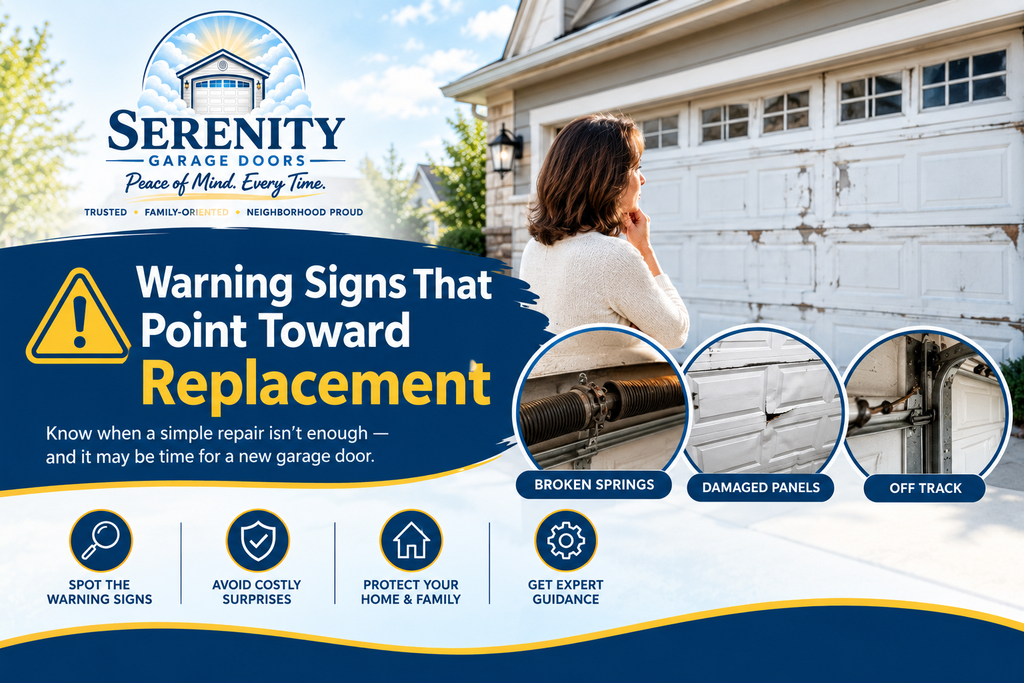
    Certain problems suggest that the issue goes beyond one repairable component. These signs do not automatically mean a new garage door is required, but they indicate that the entire system should be evaluated.

    Extensive Structural Damage

    A severely bent frame, damaged door sections, or compromised structural components can affect alignment, movement, and safety. Minor dents are generally less concerning than damage that changes the strength or shape of the door.

    When structural problems are widespread, repairing individual sections may only provide a temporary solution. A replacement can address the broader condition of the door rather than treating separate problems one at a time.

    Multiple Damaged Panels

    A single damaged panel can sometimes be repaired or replaced. When several panels are damaged, matching sections can become difficult, particularly on older garage doors.

    Multiple damaged sections can also affect appearance, balance, and overall door performance. A complete replacement may provide a cleaner and more dependable result when panel damage extends across much of the door.

    Frequent Repairs

    A long repair history is an important factor in the garage door repair or replacement decision. Repeated service involving springs, cables, rollers, tracks, panels, and hardware may indicate that the system is aging as a whole.

    Instead of considering every repair separately, look at the pattern. Frequent failures can signal that continued maintenance is becoming less economical, particularly when the same door keeps developing new problems.

    Widespread Rust And Corrosion

    Small areas of surface rust may not justify replacement. Extensive corrosion is more serious because it can weaken metal sections and hardware.

    If rust has spread across multiple areas, repairing individual spots may not address the underlying deterioration. The overall condition of the door should be considered before deciding how much additional money to put into repairs.

    Poor Insulation

    Older garage doors may provide limited insulation compared with newer insulated models. If the garage is attached to living areas or used as a workspace, better insulation can make replacement more appealing.

    A modern insulated door can provide an opportunity to improve thermal performance while upgrading the overall system. Insulation needs should be considered alongside door condition and long-term use.

    Outdated Appearance

    A garage door occupies a significant portion of many home exteriors. Faded finishes, outdated designs, dents, and visible wear can affect the property’s curb appeal.

    Replacement can combine a functional upgrade with a noticeable exterior improvement. New materials, finishes, window configurations, and design options can also create a better match for the home’s existing exterior.

    The Real Cost Behind Garage Door Repairs

    The garage door repair cost varies according to the failed component, replacement parts, labor, accessibility, and complexity of the work. A broken spring requires different service from a damaged track, worn rollers, or a malfunctioning opener.

    The condition of surrounding components also matters. A technician may find that one part has failed while the rest of the system remains strong. In another situation, several parts may show wear at the same time.

    This distinction is important when deciding between repair and replacement. A focused repair can be a practical investment when the door is structurally sound. When several major repairs are necessary, comparing the combined repair expense with garage door replacement cost provides a more realistic picture of long-term value.

    Comparing repair expenses with replacement options makes garage door repair vs. replacement a more practical long-term decision.

    What Goes Into A Garage Door Replacement?

    The garage door replacement cost depends on more than the door itself. Size, material, design, insulation, hardware, opener requirements, removal of the existing system, and installation all influence the overall investment.

    A basic residential garage door has different requirements from a custom insulated model with upgraded hardware and design features. The type of garage, opening dimensions, existing equipment, and desired appearance can also affect the replacement process.

    Long-term performance should also be considered. A new door may offer better insulation, updated safety features, smoother operation, improved durability, easier maintenance, and a refreshed appearance.

    The goal is not simply to purchase a newer door. It is to select a system that fits the property’s needs and provides useful value over its expected service life.

    Why Door Age Matters When Comparing Your Options

    There is no universal age at which every garage door should automatically be replaced. Usage, weather exposure, maintenance, installation quality, material, and operating conditions all affect service life.

    An older door may still be worth repairing when the panels remain strong, hardware is in good condition, and failures are occasional. Age becomes more significant when it is combined with repeated breakdowns, rust, deteriorated hardware, poor insulation, and increasing maintenance costs.

    This makes when to replace garage door decisions more about condition than a specific number of years. The repair history can often reveal more than the door’s age alone.

    Door age should always be considered as part of the garage door repair vs. replacement decision, especially when maintenance costs are increasing.

    Panel Damage: Repairable Problem Or Bigger Concern?

    Garage door panel damage can range from a small dent to a severely bent or compromised section. Minor cosmetic damage may be repairable, while significant damage may require panel replacement.

    A single damaged panel does not automatically mean the complete door needs to be replaced. If the surrounding sections remain strong and a compatible panel is available, replacing one section can be a practical solution.

    The situation changes when several panels are damaged or the original door design is discontinued. Finding a matching section for an older system may become difficult, with differences in color, profile, insulation, or finish.

    The surrounding condition of the door should therefore be considered before deciding between garage door damaged panel repair or replacement. Matching the existing door, maintaining balance, and preserving dependable operation are all important factors.

    The Garage Door Opener Is A Separate Decision

    The garage door opener can develop problems even when the door itself remains in good condition. Motor issues, worn drive components, electrical faults, excessive noise, and outdated safety features can all affect opener performance.

    For a garage door opener repair vs replacement decision, consider the opener’s age, repair history, reliability, noise level, safety features, and compatibility with the existing door.

    An opener with one isolated fault may be worth repairing. A unit that repeatedly fails or has become outdated may be better replaced.

    The condition of the garage door itself should also be checked. A new opener will not solve problems caused by broken springs, poor balance, damaged tracks, or structural deterioration.

    Making The Right Choice In Milton, GA

    For homeowners considering garage door repair in Milton, GA or garage door replacement in Milton, GA, the decision should begin with the condition of the existing system.

    A complete assessment can consider the panels, springs, cables, rollers, tracks, hinges, hardware, opener, balance, and overall operating performance. This helps distinguish an isolated repair from a larger pattern of deterioration.

    If the door has a strong structure and one worn component is causing the problem, a focused repair may preserve its remaining service life. If several parts are failing or the door has substantial structural damage, residential garage door replacement may provide a more dependable solution.

    A new garage door can also introduce better insulation, updated safety features, modern design, smoother operation, and improved durability. For property owners in Milton, understanding garage door repair vs. replacement can make it easier to choose an option that fits the door’s condition and long-term needs.

    Frequently Asked Questions

    Should I Repair Or Replace My Garage Door?

    Repair is generally suitable when the main structure remains strong and the problem involves a replaceable component. Replacement may be more practical when the door has extensive damage, repeated failures, or several aging components.

    Is It Cheaper To Repair Or Replace A Garage Door?

    A single repair is generally less expensive than complete replacement. However, repeated repairs on an aging door can add up, making it worthwhile to compare the accumulated costs with a new system.

    How Do I Know If My Garage Door Needs To Be Replaced?

    Look for structural damage, multiple damaged panels, widespread rust, repeated repairs, poor insulation, outdated hardware, and ongoing operating problems. Several of these signs together may indicate that replacement deserves consideration.

    When Should You Replace A Garage Door?

    Replacement may make sense when the door becomes unreliable, unsafe, expensive to maintain, or difficult to restore. Age is one factor, but condition and repair history are equally important.

    Is Garage Door Repair Worth It?

    Repair can be worthwhile when the garage door is structurally sound and the problem is limited to one or a few components. A focused repair may extend the useful life of an otherwise dependable door.

    How Old Should A Garage Door Be Before Replacing It?

    There is no fixed replacement age for every garage door. A well-maintained door can remain useful for many years, while an older system with recurring failures and deterioration may benefit from replacement sooner.

    Is A Damaged Garage Door Panel Better Repaired Or Replaced?

    Minor or localized damage may be repairable. A severely damaged section may require panel replacement, while multiple damaged panels or unavailable matching sections can make complete door replacement more practical.

    Should I Repair Or Replace My Garage Door Opener?

    An opener with an isolated fault may be worth repairing. Replacement can make more sense when the opener is outdated, repeatedly failing, excessively noisy, or missing important modern safety features.

    Choose The Option That Fits Your Garage Door

    Choosing between garage door repair and replacement starts with understanding the condition of the entire system. Serenity can assess the springs, cables, rollers, tracks, panels, opener, hardware, and overall operation to determine the source of the issue. If the door remains structurally sound and only one component has failed, a targeted repair may restore reliable performance without replacing the complete system. When damage, wear, or repeated repairs affect multiple areas, a new door may offer better durability, insulation, safety, and long-term value. Each recommendation should consider the door’s age, repair history, maintenance requirements, and expected service life. For dependable garage door service in Milton, GA, Serenity can help identify the option that best suits your property.

    Related Garage Door Services

    Garage Door Replacement
    Garage Door Panel Replacement
    Garage Door Panel Repair
    Garage Door Roller Repair
    Garage Door Track Repair

  • How Much Does Garage Door Spring Replacement Cost?

    How Much Does Garage Door Spring Replacement Cost?

    A garage door spring can fail without much warning, leaving a door that suddenly feels too heavy, refuses to open, or hangs unevenly. When that happens, one of the first things homeowners want to know is the garage door spring replacement cost. The final price is not the same for every garage door because spring type, door weight, spring size, cycle rating, labor, and replacement parts all play a role.

    For homeowners in Milton, GA, a dependable garage door is part of everyday convenience and property access. A damaged spring can interrupt morning routines, trap a vehicle inside the garage, or make the opener work harder than it should. Knowing what influences garage door spring repair cost makes it easier to understand a service estimate and choose the right repair for the door.

    Understanding Garage Door Spring Replacement Cost

    The garage door spring replacement cost depends on the specific spring system installed on the door and the work required to restore proper operation. Torsion springs and extension springs have different designs, while single and double garage doors can require different spring capacities.

    The condition of the surrounding garage door components can also affect the final garage door spring replacement price. During service, a technician may inspect the cables, drums, rollers, tracks, brackets, bearings, and opener to see if the failed spring has contributed to additional wear or operating problems.

    Spring specifications are equally important. Length, wire size, inside diameter, and cycle rating all help determine the correct replacement. A spring should be selected according to the garage door’s weight and configuration rather than simply choosing one that appears similar to the original.

    Key Factors That Shape Replacement Pricing

    Several details can change the garage door spring repair price from one property to another. Understanding these factors gives homeowners a clearer picture of what they are paying for.

    Type Of Garage Door Spring

    Torsion and extension springs perform the same basic job but operate differently. Torsion springs are mounted above the garage door, while extension springs are installed along the sides of the door. Their hardware, installation process, and service requirements can influence the overall price.

    Weight Of The Garage Door

    The spring system must provide enough lifting force for the door. A lightweight standard door may require different springs than a heavy insulated, wood, oversized, or custom garage door. Proper weight matching helps maintain smooth movement and reliable balance.

    Spring Cycle Rating

    A spring’s cycle rating indicates its expected number of open-and-close cycles. Higher-cycle springs are designed for greater longevity and may affect the garage door spring replacement price. The right rating depends on the door’s usage and the homeowner’s long-term expectations.

    Spring Size And Specifications

    Garage door springs are available in different lengths, wire sizes, and diameters. Choosing the correct specification is essential for proper tension and door balance. A professional can measure the existing system and determine the appropriate replacement.

    Single Or Double Garage Door

    Garage door size can influence spring requirements. A single garage door generally has different weight and lifting requirements than a wider double garage door. The spring system must be selected according to the actual door configuration.

    Labor And Replacement Components

    The overall garage door spring service cost can include the spring, installation, tension adjustment, balance testing, safety inspection, and required hardware. If cables, drums, bearings, brackets, or other components are damaged or worn, additional parts may be needed.

    Torsion Springs And Extension Springs

    Torsion springs are positioned above the garage door opening and use rotational force to help lift and balance the door. Extension springs are installed beside the horizontal tracks and stretch as the door opens.

    The torsion spring replacement cost can differ from extension spring service because each system uses different components and installation procedures. However, the spring type alone does not determine the final price.

    Door weight, spring dimensions, cycle rating, hardware condition, labor, and the complexity of the repair can all contribute to the estimate. A qualified garage door technician can identify the existing system and determine which replacement matches the door’s requirements.

    What Your Spring Replacement Service May Include

    Labor can be an important part of the overall replacement estimate. Instead of comparing only the price of a replacement spring, homeowners should consider the complete service being provided.

    A professional technician may:

    • Inspect the existing spring system
    • Measure the required replacement spring
    • Remove the failed spring safely
    • Install the correct replacement
    • Adjust spring tension
    • Check door balance
    • Test opening and closing
    • Inspect connected hardware

    The technician may also look at cables, drums, rollers, bearings, brackets, tracks, and the garage door opener. Finding worn components during the inspection can prevent another garage door problem from developing shortly after the spring replacement.

    Signs Your Garage Door Spring Is Failing

    Garage door springs often provide warning signs before complete failure, although some springs can snap suddenly. Paying attention to changes in door movement can help homeowners recognize a problem sooner.

    Common signs include:

    • The door suddenly feels very heavy
    • The opener struggles to lift it
    • The door stops during opening
    • One side rises higher than the other
    • The door closes unusually fast
    • A visible spring is broken
    • A loud snap comes from the garage
    • The door will not open normally
    • Manual movement becomes difficult

    A broken spring can disturb the garage door balance because the spring system supports much of the door’s lifting load. Continuing to operate the door may place additional strain on the opener and other hardware.

    A professional safety inspection can determine whether the spring is broken, worn, incorrectly sized, or affected by another mechanical issue.

    Repair Or Replacement For A Broken Spring

    A garage door spring that has physically broken is generally replaced rather than repaired. Once the spring has lost its structural integrity, attempting to restore it does not provide a dependable long-term solution.

    The replacement should match the garage door’s weight, size, spring type, and operating requirements. This is especially important for homeowners looking for broken garage door spring repair in Milton, GA, since the correct spring specification is essential for proper operation.

    If a garage door has two springs, the second spring should also be inspected. Springs installed as a pair may have experienced similar wear, and checking both can help identify potential problems before they cause another interruption.

    Why Professional Spring Installation Matters

    Garage door springs store substantial mechanical energy. A mistake during removal, installation, or tension adjustment can cause serious injury or damage to the door system.

    Torsion springs require controlled tension adjustment, while extension spring systems also have specific installation and safety requirements. Incorrect sizing can affect door balance, increase wear, and place unnecessary stress on the opener.

    Professional installation provides more than a new spring. It allows the technician to verify the spring selection, adjust the system correctly, check the door’s movement, and identify related issues that may affect performance.

    When A Garage Door Professional Is The Right Choice

    A broken spring should not be ignored, especially when the garage door is stuck, unusually heavy, or difficult to control. Prompt service can help prevent unnecessary strain on the opener and other components.

    Same-day garage door spring repair can be especially valuable when a vehicle is trapped inside the garage, the door is stuck closed, or normal household access has been interrupted.

    Professional service is a smart choice when:

    • A spring has snapped
    • The door feels unusually heavy
    • The door sits unevenly
    • A cable has come loose
    • The opener cannot lift the door
    • The door stops during operation
    • The spring produces unusual sounds
    • The correct spring type is uncertain

    Homeowners searching for garage door spring repair near me should look for a service provider that can inspect the complete system rather than simply replacing the visible broken component.

    Garage Door Spring Service In Milton, GA

    Garage door spring problems can quickly become inconvenient for homeowners in Milton, GA. A door that worked normally yesterday may suddenly become impossible to open after a spring breaks, making vehicle access and daily routines more difficult.

    The right replacement starts with understanding the existing garage door. A technician can assess the spring type, door weight, dimensions, hardware condition, and balance before recommending the appropriate solution.

    For homeowners comparing garage door spring replacement cost Milton, GA, a clear estimate should account for the spring specifications, labor, installation requirements, and any related repairs. This provides a better understanding of the service than comparing a basic spring price alone.

    Once the replacement is completed, the door should be tested for smooth movement and proper balance. The opener and connected hardware can also be checked to make sure the repaired spring system is working as intended.

    Common Questions About Spring Replacement

    How Much Does It Cost To Replace A Garage Door Spring?

    The price varies according to spring type, door size, spring specifications, cycle rating, labor, and the condition of related components. A professional inspection provides a more accurate estimate for the specific garage door.

    How Much Does Garage Door Spring Repair Cost?

    The garage door spring repair cost depends on whether the spring needs replacement and whether other components require service. Torsion and extension spring systems can have different repair requirements.

    How Much Does It Cost To Replace Torsion Springs?

    The torsion spring replacement cost depends on the spring’s size, cycle rating, door weight, labor, and hardware condition. Proper measurements are necessary to select the correct replacement.

    Why Is Garage Door Spring Replacement Expensive?

    The service involves more than the replacement spring. Safe removal, correct spring selection, installation, tension adjustment, balance testing, inspection, and labor all contribute to the overall price.

    Does Garage Door Spring Replacement Include Labor?

    Labor may be included in a complete replacement estimate, but the exact coverage depends on the service provider. Homeowners should confirm whether installation, adjustment, testing, and required hardware are included.

    Should I Repair Or Replace My Garage Door Spring?

    A physically broken spring is generally replaced rather than repaired. A technician can inspect the complete system and recommend the appropriate replacement based on the garage door’s specifications and condition.

    Can Same-Day Spring Service Help With A Stuck Garage Door?

    Same-day service can be helpful when a broken spring leaves the garage door stuck or prevents vehicle access. Availability depends on the service schedule and technician availability.

    Get Reliable Garage Door Spring Service

    A damaged garage door spring can disrupt your routine and affect the balance and operation of the entire door. Serenity can inspect the spring system and determine the appropriate repair or replacement for your garage door.  Proper spring sizing and installation help support smooth, balanced, and dependable door movement.  A complete inspection can also uncover worn cables, rollers, drums, brackets, or other related components.  For homeowners in Milton, GA, timely professional service can restore convenient garage access and dependable performance. Schedule your garage door spring service today for a thorough inspection and the right solution for your system.


    Related Garage Door Services

    Garage Door Spring Repair
    Broken Garage Door Spring Repair
    Same-Day Garage Door Spring Repair
    Garage Door Spring Safety Inspection


  • Why Is My Garage Door So Loud? 8 Common Causes to Check

    Why Is My Garage Door So Loud? 8 Common Causes to Check

    A garage door will naturally make some noise when it opens and closes, but a sudden increase in noise can indicate that something needs attention. Grinding, squeaking, rattling, popping, or banging sounds can come from worn rollers, dry hinges, loose hardware, tracks, cables, or other garage door components.

    If your garage door has become noticeably louder, understanding the possible causes can help you decide when maintenance may be enough and when professional service is needed.

    For homeowners in Milton, GA, and nearby North Atlanta communities, Serenity Garage Doors provides professional garage door service and can help diagnose unusual sounds before they develop into more serious problems.

    What Causes a Noisy Garage Door?

    There isn’t always one reason for a noisy garage door. Several moving components work together every time the door operates, and wear in one component can affect the rest of the system.

    Common causes of a noisy garage door include:

    • Worn garage door rollers
    • Dry or worn hinges
    • Loose hardware
    • Lack of lubrication
    • Damaged or misaligned tracks
    • Problems with the garage door opener
    • Worn cables or other hardware
    • General wear and tear

    The type of sound your garage door makes can also provide clues about where the problem may be.

    1. Worn Garage Door Rollers

    Worn rollers are one of the most common reasons a garage door becomes loud.

    Rollers move along the garage door tracks as the door opens and closes. Over time, bearings can wear out, rollers can become damaged, and movement can become rougher.

    You may hear:

    • Grinding
    • Squeaking
    • Rattling
    • Scraping
    • Repetitive clicking

    If the noise appears to come from the sides of the garage door while it moves, the rollers may be worth inspecting.

    Serenity Garage Doors provides professional garage door roller repair for homeowners in Milton and surrounding North Atlanta communities.

    2. Dry or Worn Hinges

    Garage door hinges connect the individual door sections and allow them to bend as the door moves along the tracks.

    When hinges become dry, loose, or worn, they can produce squeaking or popping sounds during operation.

    Regular maintenance can help identify worn hardware before it becomes a larger problem.

    If your garage door is becoming louder over time, a professional inspection can determine whether the hinges or other moving components need attention.

    3. The Garage Door Needs Lubrication

    Moving metal components can become noisy when they aren’t properly maintained.

    Depending on the garage door system, components such as hinges, rollers, and other moving parts may require appropriate lubrication.

    However, not every component should simply be sprayed with lubricant. Using the wrong product or applying it incorrectly can create additional problems.

    Professional garage door lubrication can help keep appropriate moving components operating more smoothly.

    For homeowners in Milton, Alpharetta, Roswell, and nearby communities, regular maintenance can also help identify other sources of noise.

    4. Loose Garage Door Hardware

    A garage door moves repeatedly throughout the year. That constant movement can cause certain bolts, fasteners, and hardware to loosen over time.

    Loose hardware may create:

    • Rattling sounds
    • Vibrations
    • Clicking noises
    • Shaking during operation

    If your garage door suddenly starts rattling, don’t assume the sound is harmless.

    A technician can inspect the door and identify whether loose hardware is contributing to the noise.

    5. Damaged or Misaligned Garage Door Tracks

    The garage door tracks guide the rollers as the door moves.

    If a track becomes bent, loose, or misaligned, the rollers may not move smoothly through the system.

    This can produce scraping, grinding, popping, or vibration.

    Track problems can also put additional stress on rollers and other components.

    If your garage door appears crooked or the track looks damaged, avoid attempting to bend it back yourself.

    Serenity Garage Doors provides garage door track repair for homeowners in Milton and surrounding North Atlanta areas.

    6. A Problem With the Garage Door Opener

    Sometimes the garage door itself isn’t the source of the noise.

    The opener can produce unusual sounds when components inside the unit begin to wear or when the opener is working harder than it should.

    You may notice:

    • Humming
    • Grinding
    • Clicking
    • Vibrations
    • Unusual motor noise

    If the sound seems to come directly from the opener, professional diagnosis can help determine whether the opener needs repair, adjustment, or replacement.

    Serenity Garage Doors provides garage door opener repair and garage door opener diagnostic services.

    7. Worn or Damaged Cables

    Garage door cables work with the spring system to help the door move properly.

    If a cable becomes frayed, damaged, or improperly positioned, you may notice unusual sounds or uneven movement.

    Cable problems can also affect how the door sits and moves.

    Never attempt to handle a damaged garage door cable yourself. Like springs, cables are part of a system that can store and transfer significant mechanical force.

    If you’re in Milton, GA, Alpharetta, Johns Creek, or surrounding areas, professional garage door cable repair can help address the problem safely.

    8. General Wear and Tear

    Sometimes a noisy garage door is simply showing signs that several components have reached the point where they need maintenance.

    A garage door contains numerous moving parts that experience repeated use.

    Over time, you may notice:

    • Increased noise
    • Slower movement
    • More vibration
    • Squeaking
    • Rattling
    • Rough operation

    A maintenance inspection can help identify smaller issues before they turn into more expensive repairs.

    Serenity Garage Doors offers garage door maintenance and tune-up services for homeowners in Milton and nearby North Atlanta communities.

    What Does Different Garage Door Noise Mean?

    The type of sound can sometimes provide a useful starting point.

    Squeaking Garage Door

    Squeaking can be associated with dry or worn moving components, including hinges and rollers.

    Grinding Garage Door

    Grinding may indicate worn rollers, track problems, opener issues, or another mechanical problem.

    Rattling Garage Door

    Rattling can be caused by loose hardware, worn components, or excessive vibration.

    Popping Garage Door

    Popping sounds can come from hinges, springs, cables, or other components moving under tension.

    Banging Garage Door

    A loud bang can indicate a component failure, including a spring problem.

    If you hear a sudden loud bang and your garage door becomes difficult or impossible to open, stop operating the door and have it inspected.

    Serenity Garage Doors provides garage door spring repair and broken garage door spring repair.

    Is a Noisy Garage Door Dangerous?

    A noisy garage door isn’t automatically dangerous, but a new or rapidly worsening noise should not be ignored.

    Noise can sometimes be an early indication that a component is wearing out.

    For example, a worn roller may eventually affect smooth door movement, while a damaged track can create additional stress on other components.

    A loud noise accompanied by any of the following deserves prompt attention:

    • Door becomes unusually heavy
    • Door moves unevenly
    • Door comes off its track
    • Door suddenly stops working
    • Spring appears broken
    • Cable appears damaged
    • Door slams shut
    • Opener struggles to lift the door

    If you’re unsure what is causing the noise, professional diagnosis is safer than attempting to disassemble the system.

    Can You Make a Garage Door Quieter?

    In many cases, reducing garage door noise starts with identifying the actual source.

    Depending on the problem, the solution may involve:

    • Replacing worn rollers
    • Lubricating appropriate components
    • Tightening or replacing hardware
    • Repairing damaged tracks
    • Addressing cable problems
    • Servicing the garage door opener
    • Performing routine maintenance

    The correct solution depends on the condition of the individual garage door.

    Simply applying lubricant to every noisy component isn’t always the answer.

    How to Prevent a Garage Door From Getting Too Loud

    Regular maintenance can help keep your garage door operating smoothly.

    Homeowners can watch for changes in:

    • Operating noise
    • Door speed
    • Uneven movement
    • Vibration
    • Squeaking
    • Grinding
    • Rattling

    It’s also useful to have the garage door system professionally inspected when you notice a significant change in its operation.

    For homeowners in Milton, GA, and nearby areas such as Alpharetta, Roswell, Johns Creek, Cumming, Suwanee, and Woodstock, routine garage door maintenance can help identify worn components before they cause a larger problem.

    When Should You Call a Garage Door Professional?

    You should consider professional service when:

    • The garage door suddenly becomes much louder
    • Grinding or scraping sounds develop
    • The door shakes while opening
    • The door moves unevenly
    • A roller appears damaged
    • The tracks look bent or misaligned
    • A cable looks frayed
    • The opener makes unusual sounds
    • The door becomes difficult to open
    • You hear a loud bang followed by a door failure

    A professional technician can inspect the entire system rather than treating only the symptom.

    Garage Door Service in Milton, GA and Nearby Areas

    Serenity Garage Doors serves homeowners in Milton, GA, and surrounding North Atlanta communities.

    Service areas include:

    • Milton, GA
    • Alpharetta, GA
    • Roswell, GA
    • Johns Creek, GA
    • Cumming, GA
    • Suwanee, GA
    • Duluth, GA
    • Buford, GA
    • Woodstock, GA
    • Holly Springs, GA
    • Atlanta, GA
    • Dunwoody, GA
    • Marietta, GA

    Whether your garage door is squeaking in Milton, grinding in Alpharetta, rattling in Roswell, or becoming difficult to operate in Johns Creek, identifying the cause early can help prevent unnecessary damage.

    Frequently Asked Questions

    Why is my garage door so loud?

    A noisy garage door can be caused by worn rollers, dry hinges, loose hardware, damaged tracks, opener problems, cables, or general wear and tear.

    How do I make my garage door quieter?

    The first step is identifying the source of the noise. Depending on the problem, the solution may involve lubrication, roller replacement, hardware service, track repair, opener service, or general maintenance.

    Why does my garage door make a grinding noise?

    Grinding can come from worn rollers, damaged or misaligned tracks, the garage door opener, or other mechanical components. A professional inspection can identify the source.

    Why does my garage door squeak when opening?

    Squeaking can be caused by dry or worn hinges, rollers, or other moving components. Proper maintenance and lubrication may help, depending on the cause.

    Should I lubricate my garage door?

    Some garage door components benefit from appropriate lubrication, but the correct product and application matter. Professional garage door lubrication can help maintain appropriate moving components.

    Can worn rollers make a garage door loud?

    Yes. Worn rollers can create squeaking, grinding, rattling, and other noises as they move along the tracks.

    How often should a garage door be maintained?

    Maintenance needs vary depending on usage and the condition of the door. If you notice new noise, vibration, uneven movement, or other changes, it’s a good time to have the system inspected.

    Does Serenity Garage Doors service noisy garage doors in Milton, GA?

    Yes. Serenity Garage Doors provides garage door repair and maintenance services in Milton and surrounding North Atlanta communities, including Alpharetta, Roswell, Johns Creek, Cumming, Suwanee, and other listed service areas.

    Conclusion

    A noisy garage door shouldn’t automatically be ignored, especially when the sound is new or becoming progressively louder.

    Squeaking may point toward dry or worn components, while grinding can indicate roller or track problems. Rattling may come from loose hardware, and a sudden loud bang can indicate a more significant component failure.

    The best solution is to identify the source of the noise rather than simply treating the sound.

    For homeowners in Milton, GA and nearby North Atlanta communities, Serenity Garage Doors can inspect the system and determine whether your garage door needs lubrication, maintenance, roller repair, track repair, opener service, or another solution.

    Schedule Garage Door Service or call +1 (470) 570-9777 to discuss your garage door problem.

    Related Garage Door Services

  • How Do You Know If Your Garage Door Spring Is Broken? Signs to Watch For

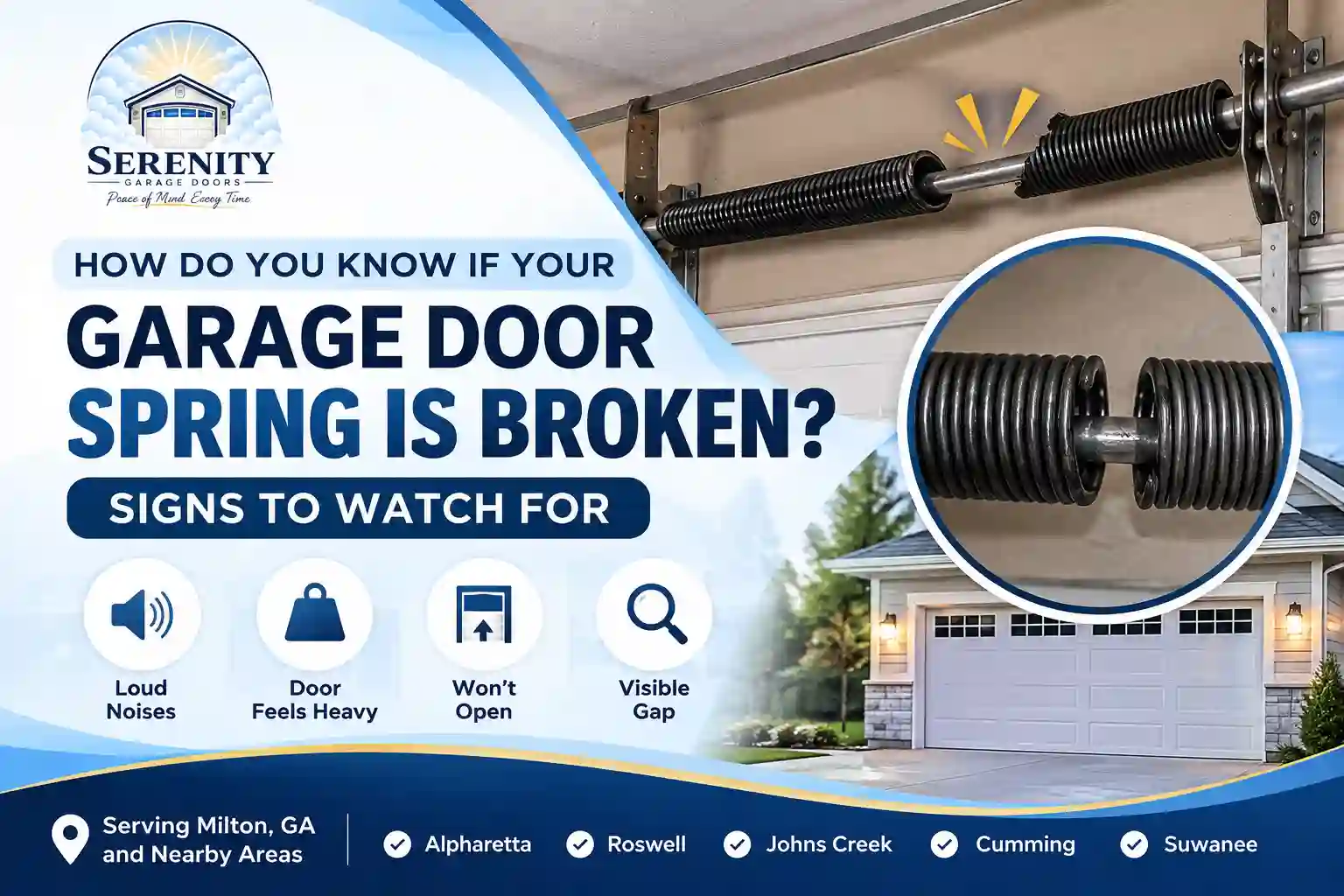
    How Do You Know If Your Garage Door Spring Is Broken? Signs to Watch For

    Your garage door spring plays an important role in helping your garage door open and close smoothly. When a spring wears out or breaks, the problem can appear suddenly. The door may become unusually heavy, refuse to open, make a loud noise, or look uneven.

    For homeowners in Milton, GA, and nearby communities such as Alpharetta, Roswell, Johns Creek, Cumming, and Suwanee, recognizing the warning signs can help you avoid additional damage and determine when professional garage door service is needed.

    But how can you tell whether the problem is actually a broken spring?

    What Does a Garage Door Spring Do?

    Garage door springs are designed to counterbalance the weight of your garage door. This allows the door to move up and down without putting the entire load on the garage door opener.

    Every time you open or close the door, the springs go through a cycle of tension and release. Over time, normal use can cause the springs to wear out.

    When a spring fails, the garage door can suddenly become much heavier and harder to operate.

    If you suspect a problem with your spring, professional garage door spring repair can help identify the issue and determine the appropriate repair.

    8 Signs of a Broken Garage Door Spring

    1. Your Garage Door Won’t Open

    One of the most noticeable signs of a broken garage door spring is a garage door that suddenly won’t open.

    You may hear the garage door opener running, but the door may stay in place. In other situations, the opener may start lifting the door before stopping because the door has become too heavy.

    A garage door that won’t open isn’t always caused by a broken spring. The opener, cables, sensors, or other components can cause similar symptoms.

    That’s why proper diagnosis is important.

    2. The Garage Door Suddenly Feels Heavy

    A properly functioning spring system helps counterbalance the weight of your garage door.

    If the door suddenly feels extremely heavy, the spring may no longer be providing the necessary support.

    This can be especially noticeable when a homeowner attempts to operate the door manually.

    If you’re in Milton, GA, Alpharetta, or Roswell and your garage door suddenly feels much heavier than normal, avoid forcing it open and have the system inspected.

    Serenity Garage Doors also provides garage door spring safety inspections.

    3. You Hear a Loud Bang From the Garage

    A broken garage door spring can sometimes make a loud popping or banging sound when it fails.

    You may hear the noise from inside your home even though nobody is using the garage door at the time.

    Afterward, you may notice that the garage door won’t open or has become significantly heavier.

    If this happens, don’t repeatedly activate the garage door opener. A professional inspection can determine whether the spring has failed and whether other components have been affected.

    4. There Is a Visible Gap in the Spring

    Another common sign is a visible separation in the spring.

    A torsion spring normally appears continuous. When it breaks, you may see a noticeable gap between the two sections.

    Although the problem may look simple, garage door springs are under significant tension.

    Do not attempt to pull, adjust, remove, or repair the spring yourself.

    Instead, contact a qualified garage door professional who can safely inspect the system.

    For homeowners who need spring repair in Milton and nearby areas, Serenity Garage Doors provides broken garage door spring repair.

    5. The Door Only Opens a Few Inches

    A garage door with a failed spring may start to open but stop after only a few inches.

    The opener may struggle because it is trying to lift the full weight of the door without the proper assistance from the spring system.

    This can sometimes look like an opener problem.

    Before replacing the opener, however, the complete garage door system should be inspected.

    Serenity Garage Doors provides garage door opener diagnostics to help identify whether the problem is related to the opener or another part of the system.

    6. Your Garage Door Looks Uneven

    Does one side of your garage door appear higher than the other?

    An uneven door can indicate a problem with the springs, cables, rollers, or tracks.

    Operating an uneven door repeatedly can place additional stress on other components.

    If your garage door is hanging unevenly in Milton, Johns Creek, Cumming, or surrounding North Atlanta areas, it’s worth having the system professionally inspected.

    If the problem involves a damaged or disconnected cable, Serenity Garage Doors also provides garage door cable repair.

    7. The Garage Door Slams Shut

    A garage door should move in a controlled manner when opening and closing.

    If the door suddenly drops or slams shut, there may be a problem with the spring system or another component responsible for controlling the door’s weight.

    This can create a serious safety concern.

    Keep people away from the door and avoid attempting to catch or manually control a heavy garage door.

    8. The Garage Door Opener Struggles

    Your garage door opener should not have to work excessively hard to lift the door.

    If you hear the motor struggling, notice unusual movement, or see the opener stop during operation, the spring system could be one possible cause.

    However, opener gears, sensors, cables, tracks, and other components can also cause similar symptoms.

    A professional diagnosis can help determine what actually needs to be repaired.

    What Causes Garage Door Springs to Break?

    Garage door springs don’t last forever.

    Every opening and closing cycle places stress on the spring. Over time, repeated cycles can cause the metal to weaken and eventually fail.

    Several factors can affect spring life, including:

    • Frequency of garage door use
    • Door weight
    • Spring quality
    • Correct spring sizing
    • Overall garage door condition
    • Maintenance
    • Normal wear and tear

    Regular maintenance can help identify worn components before they develop into a more serious problem.

    Serenity Garage Doors offers garage door maintenance and tune-up services for homeowners in Milton and surrounding communities.

    Can You Still Open a Garage Door With a Broken Spring?

    It is generally best not to keep operating a garage door after a spring has broken.

    Without the spring providing its normal counterbalance, the door can become extremely heavy. Continuing to operate the system can put additional stress on the opener and other components.

    If your garage door spring breaks, keep the area clear and contact a professional garage door technician.

    For homeowners who need prompt service, Serenity Garage Doors offers same-day garage door spring repair.

    Can You Replace a Garage Door Spring Yourself?

    Garage door spring replacement is not a simple DIY repair.

    Garage door springs store significant mechanical energy. Incorrectly removing, adjusting, or installing a spring can result in serious injury or damage to the garage door system.

    A professional technician can:

    • Identify the type of spring
    • Determine the appropriate spring size
    • Inspect the door and hardware
    • Replace the damaged component
    • Balance the garage door
    • Test the door’s operation
    • Check related safety components

    If you’re located in Milton, GA, professional garage door spring repair can help get the system working properly again.

    Broken Spring or Another Garage Door Problem?

    A garage door that won’t open doesn’t automatically mean the spring is broken.

    Similar symptoms can be caused by:

    • Garage door opener problems
    • Broken or damaged cables
    • Worn rollers
    • Bent tracks
    • Safety sensor problems
    • Off-track doors
    • Damaged hardware

    For example, if the door has moved out of its normal track, it may require garage door off-track repair instead of spring replacement.

    Getting the problem diagnosed before replacing parts can help avoid unnecessary repairs.

    How to Prevent Garage Door Spring Problems

    You can’t prevent garage door springs from eventually wearing out, but regular maintenance can help identify problems earlier.

    Watch for changes such as:

    • Unusual noises
    • Slow movement
    • Uneven opening
    • A heavier-than-normal door
    • Excessive vibration
    • Frayed cables
    • Worn rollers
    • Loose hardware

    Professional maintenance can also help keep moving components operating properly.

    For homeowners in Milton, Alpharetta, Roswell, Johns Creek, Cumming, Suwanee, and nearby North Atlanta communities, regular garage door maintenance can be a useful way to identify developing problems before they become larger repairs.

    Garage Door Spring Repair in Milton, GA

    Serenity Garage Doors provides professional garage door service from its home base in Milton, GA, serving homeowners throughout surrounding North Atlanta communities.

    Service areas include:

    • Milton
    • Alpharetta
    • Roswell
    • Johns Creek
    • Cumming
    • Suwanee
    • Duluth
    • Buford
    • Woodstock
    • Holly Springs
    • Atlanta
    • Dunwoody
    • Marietta

    Whether you’re dealing with a broken spring, heavy garage door, unusual noise, or another garage door problem, professional diagnosis can help identify the correct solution.

    Frequently Asked Questions

    How do I know if my garage door spring is broken?

    Common signs include a garage door that won’t open, a door that suddenly feels very heavy, a visible gap in the spring, a loud bang from the garage, uneven movement, or an opener that struggles to lift the door.

    Is it safe to use a garage door with a broken spring?

    It’s best to avoid repeatedly operating a garage door with a suspected broken spring. The door may be extremely heavy and could place additional stress on the opener or other components.

    How long do garage door springs last?

    Spring lifespan varies based on factors such as usage, door weight, spring quality, installation, and maintenance. Regular inspections can help identify signs of wear.

    Can I replace a garage door spring myself?

    Spring replacement can be dangerous because garage door springs store significant mechanical energy. Professional service is recommended for spring inspection, replacement, and adjustment.

    Does Serenity Garage Doors serve areas near Milton, GA?

    Yes. Serenity Garage Doors serves Milton and surrounding North Atlanta communities, including Alpharetta, Roswell, Johns Creek, Cumming, Suwanee, Duluth, Buford, Woodstock, Holly Springs, Atlanta, Dunwoody, and Marietta.

    Need Garage Door Spring Repair in Milton, GA?

    If your garage door has suddenly become heavy, won’t open, makes an unusual noise, or shows other signs of spring failure, don’t keep forcing the door to operate.

    Serenity Garage Doors provides professional garage door spring repair in Milton, GA and nearby North Atlanta communities.

    Schedule Garage Door Service or call +1 (470) 570-9777 to discuss your garage door problem.

    Related Services